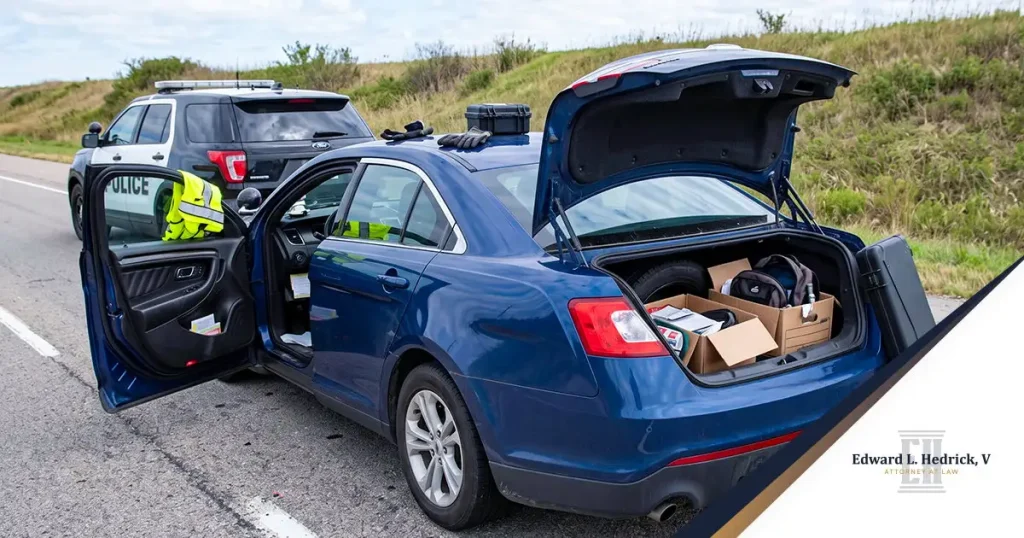

Police officer standing beside a car during a traffic stop in North Carolina

Blue lights in the mirror are stressful enough without wondering what an officer can and can’t do once your car is pulled over. Unlike a home, which carries strong warrant protections, a vehicle sits in a strange middle ground under the law. Knowing where that line actually falls, before you’re standing on the side of the road, can make a real difference in how a stop plays out and what happens to any evidence found along the way. If a search already happened and you’re not sure it was legal, a criminal lawyer Hickory NC can look at exactly what occurred and whether it holds up.
The Fourth Amendment and Vehicle Searches in North Carolina

The Fourth Amendment protects against unreasonable searches and seizures, but courts have long treated vehicles differently than houses. That difference shapes almost every question about whether a car search was lawful.

Why Cars Are Treated Differently Than Homes

Vehicles are mobile, which courts have found creates a practical problem: by the time an officer gets a warrant, the car and everything in it could be gone. This is often called the automobile exception, and it’s the reason a criminal lawyer Hickory NC will tell you that vehicle stops rarely require a warrant the way a home search would.

What “Reasonable” Really Means

Reasonableness is the standard courts apply to every search question, and it’s decided case by case. An officer doesn’t need a warrant to search your car, but they generally do need a valid legal basis, and that basis is where most disputes end up.

When Police Can Search Your Car Without a Warrant

There are several recognized situations where a warrantless vehicle search is considered lawful in North Carolina. Each one has its own requirements, and officers sometimes stretch them further than the law actually allows.

Probable Cause

If an officer has probable cause to believe your car contains evidence of a crime, contraband, or illegal items, they can search the vehicle without a warrant and without your consent.

Common Examples of Probable Cause

The smell of marijuana or alcohol, visible drug paraphernalia, admissions made during the stop, or a K-9 alert are all commonly cited as probable cause, though each one can be challenged depending on the specific facts.

Consent
If you agree to let an officer search your car, they generally don’t need probable cause or a warrant at all. Consent has to be given freely, and you’re allowed to say no. Many people don’t realize declining is an option.

Search Incident to Arrest
If you’re arrested during a stop, officers can search areas of the car within your immediate reach, or the entire vehicle if they reasonably believe it contains evidence related to the arrest.

Plain View Doctrine

If an officer sees something illegal in plain sight, a weapon on the seat, open containers, or drugs on the dashboard, they can seize it and use that observation to justify searching further.

Inventory Searches
When a vehicle is impounded, police can conduct a routine inventory search to document its contents. This doesn’t require probable cause, but it does need to follow standard department procedure rather than being used as a pretext to look for evidence.

When a Warrantless Search Crosses the Line
Not every search an officer performs is actually lawful, even when it happens during a legitimate traffic stop. Searches that go beyond what the law allows can result in evidence being thrown out of a case entirely.

Signs the Search May Have Been Unlawful

A search that extends well beyond the stated reason for the stop, pressure to “consent” after you’ve already said no, or a search based on a hunch rather than specific facts are all red flags. If any of this sounds familiar, it’s worth having Expert lawyers in Hickory, NC review the stop in detail.

What to Do During a Traffic Stop


What you say and do in the first few minutes of a stop often matters more than people expect. Staying calm and knowing your rights protects you without escalating the situation.

Your Rights During the Stop


You have the right to remain silent beyond providing your license, registration, and insurance. You also have the right to clearly decline a search request without that refusal being treated as an admission of guilt.

What You Can Say

A calm, clear statement is usually enough: you don’t consent to a search, and you’d like to know if you’re being detained or are free to go. You don’t need to explain, argue, or justify the request.

A Simple Script to Remember
“Officer, I don’t consent to a search of my vehicle. Am I free to leave?” is a short, respectful line that preserves your rights without creating conflict during the stop.

What Happens If Evidence Was Found Illegally
If a search violated your rights, any evidence found as a result may not be usable against you in court, even if that evidence would otherwise be damaging to your case.

Filing a Motion to Suppress
This is a formal request asking the court to exclude evidence obtained through an unlawful search. It requires a detailed look at the stop, the officer’s stated justification, and whether the search actually stayed within legal limits. A criminal lawyer Hickory NC can evaluate whether this motion applies to your situation.
 

Why This Motion Matters

When key evidence is suppressed, prosecutors sometimes have little left to support the charges, which can lead to reduced charges or a case being dismissed altogether.

Examples of Suppressed Evidence

Drugs, weapons, or paraphernalia found during an unlawful search, statements made after an unlawful detention, and items seized without valid consent have all been excluded in cases where the search didn’t hold up.

Quick Note on Timing

Motions to suppress generally need to be filed within specific deadlines before trial, so acting quickly after an arrest matters.


Faq

Frequently Asked Questions

Can police search my car just because they pulled me over?

No. A traffic stop alone doesn't give officers the right to search your vehicle. They need probable cause, your consent, or another recognized legal basis.

Do I have to let police search my car if they ask?

No. You have the right to decline a search request, and doing so is not itself evidence of wrongdoing.

Can evidence be thrown out if the search was illegal?

Yes. Evidence obtained through an unlawful search can often be suppressed, meaning prosecutors can't use it against you.

What should I do if I think my rights were violated during a stop?

Avoid arguing at the scene, write down what you remember as soon as possible, and speak with a criminal defense attorney about reviewing the stop.

What if the officer says a dog alerted on my car?

A reliable K-9 alert can establish probable cause, but the dog's training records and the circumstances of the alert can sometimes be challenged.

Law Office Chair

Talk to a Hickory Criminal Lawyer About Your Case

Whether you’re facing charges after a vehicle search or you’re being investigated for an Assault Lawyer Hickory, NC matter that started with a traffic stop, the details of how evidence was obtained can shape the entire case. The Law Offices of Edward L. Hedrick, V offer a free, confidential consultation for criminal matters across the Hickory area. Book a consultation or call +1 (828)-401-1979.

Disclaimer: This article is provided for general informational purposes only and does not constitute legal advice. Reading it does not create an attorney-client relationship with the Law Offices of Edward L. Hedrick, V. Estate planning needs vary with your personal and financial circumstances, and the law can change. Speak with a licensed North Carolina attorney about your specific situation.

Last updated:  September 2026. By Edward L. Hedrick, V, Attorney and President of the Alexander County Bar Association.